
How to Start a Co-Living Real Estate Business with AI: Affordable Housing Solutions for Young Professionals
NestQuest provides innovative, rentable pop-up modular housing communities for young people. By offering a co-living experience near job hubs, we enable residents to explore new areas and assess their living preferences without the financial pressure of a mortgage.

How to Start a Co-Living Real Estate Business with AI: Affordable Housing Solutions for Young Professionals
In today's fast-paced world, young professionals are facing a housing crisis. Skyrocketing prices, long-term mortgage commitments, and the desire for flexibility are hindering their ability to secure suitable living arrangements. Enter the co-living real estate concept—a revolutionary housing solution that offers affordability, flexibility, and community. For young professionals, co-living provides the perfect opportunity to live near job hubs and explore different cities without the burden of long-term commitments. This innovative approach not only addresses the housing affordability issue but also aligns perfectly with the lifestyle of today's nomadic workforce. As a startup entrepreneur, tapping into this market with the aid of AI technologies presents a lucrative opportunity to redefine housing for the next generation.
The Co-Living Real Estate Market Opportunity
The demand for co-living spaces is on the rise, driven by the need for affordable housing solutions among young professionals. The Total Addressable Market (TAM) for co-living in the United States alone is substantial, with millions of young adults seeking flexible living arrangements close to urban job centers. The co-living market is expected to grow at a CAGR of over 4% from 2021 to 2027, as reported by industry analysts.
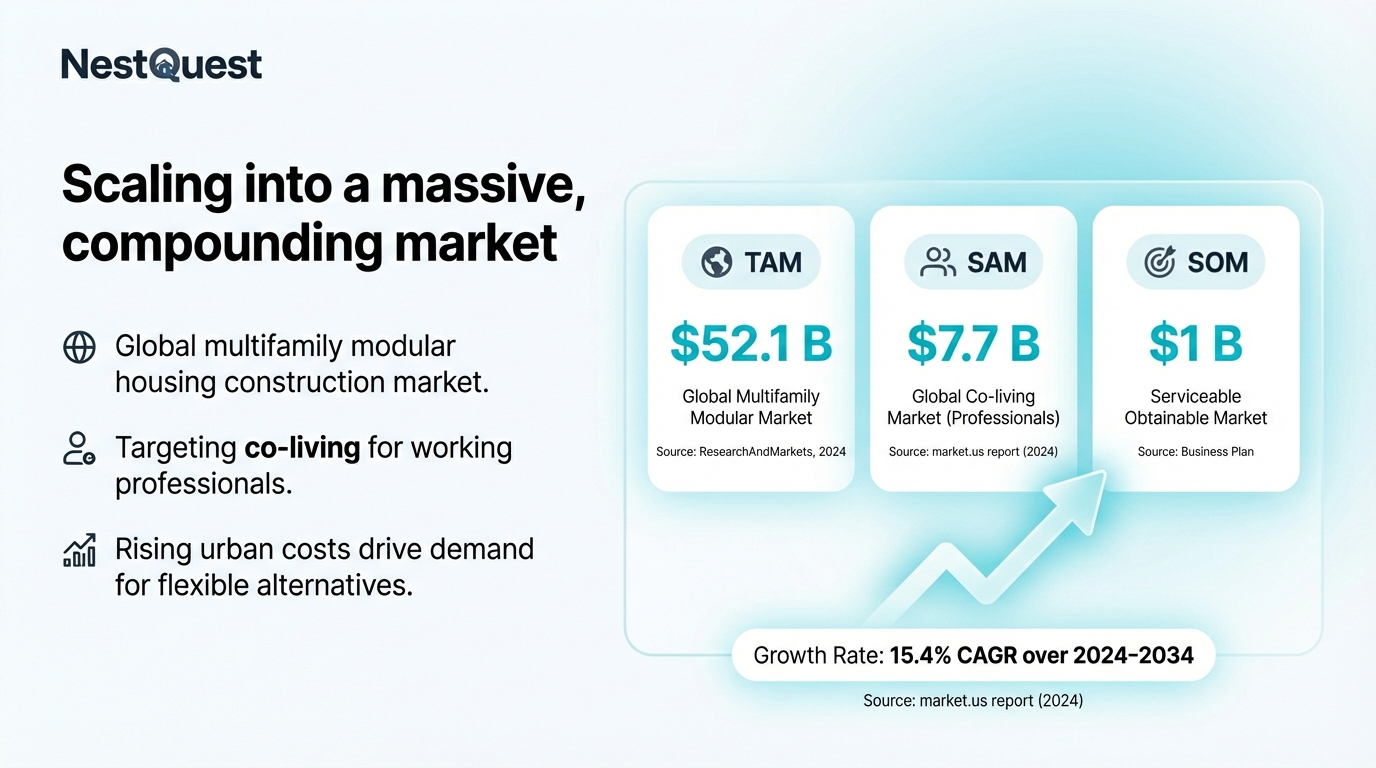 Scaling into a massive, compounding market - NestQuest
Scaling into a massive, compounding market
Scaling into a massive, compounding market - NestQuest
Scaling into a massive, compounding market
Trends Driving Co-Living Real Estate
- Urbanization: As more young professionals flock to cities for job opportunities, the demand for affordable housing near these economic hubs increases.
- Lifestyle Flexibility: The gig economy and remote work culture have led to an increased desire for flexibility in living arrangements.
- Community-Oriented Living: Millennials and Gen Z value community and shared experiences, making co-living an attractive option.
Why Now Is the Time
The current economic landscape, coupled with technological advancements, makes now the perfect time to invest in co-living real estate. The integration of AI in property management and customer experiences is setting the stage for more efficient and personalized co-living solutions. Entrepreneurs who seize this opportunity can create a significant impact by offering young professionals a cost-effective and flexible living solution.
How AI is Revolutionizing Co-Living Real Estate
Artificial Intelligence (AI) is transforming the co-living real estate industry by providing innovative solutions that enhance both operational efficiency and tenant experience.
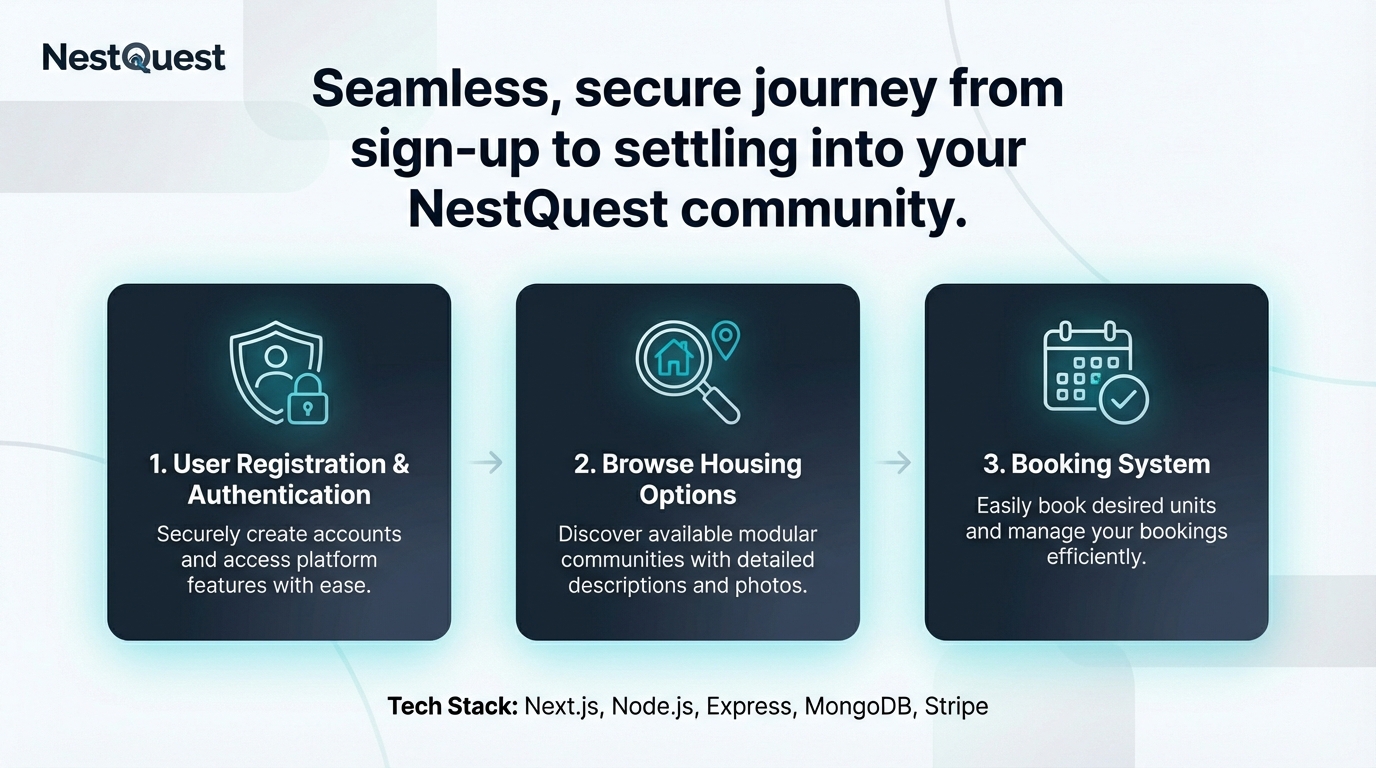 Workflow composed of three hero features - NestQuest
Workflow composed of three hero features
Workflow composed of three hero features - NestQuest
Workflow composed of three hero features
AI Applications in Co-Living Real Estate
- Smart Property Management: AI-powered systems can automate maintenance requests, optimize energy usage, and ensure security, reducing operational costs and improving tenant satisfaction.
- Personalized Experiences: AI algorithms can analyze tenant preferences and behaviors to offer customized living experiences, from personalized amenities to curated community events.
- Predictive Analytics: AI tools can analyze market trends and tenant data to predict demand, helping co-living operators make informed decisions about expansion and pricing strategies.
By leveraging AI, co-living startups can enhance their service offerings, attract more tenants, and streamline operations, thereby gaining a competitive edge in the market.
Building Your Co-Living Real Estate Startup: Step-by-Step
Starting a co-living real estate business requires careful planning and execution. Here’s a step-by-step guide to help you build a successful venture:
 Sequenced GTM playbook - NestQuest
Sequenced GTM playbook
Sequenced GTM playbook - NestQuest
Sequenced GTM playbook
1. Conduct Market Research
- Identify target demographics and preferred locations for co-living spaces.
- Analyze competitors and market saturation in chosen areas.
2. Develop a Business Plan
- Define your unique value proposition and mission statement.
- Outline operational strategies, including property acquisition and management.
3. Secure Funding
- Explore funding options such as angel investors, venture capital, or crowdfunding platforms.
- Create a detailed financial plan to attract potential investors.
4. Design Your Co-Living Spaces
- Opt for modular, flexible designs that cater to diverse tenant needs.
- Incorporate smart technology and sustainable practices.
5. Implement AI Solutions
- Invest in AI tools for property management and tenant engagement.
- Use data analytics to refine marketing strategies and improve customer experiences.
6. Build a Strong Community
- Foster a sense of belonging through community events and collaborative spaces.
- Encourage tenant feedback and adapt to changing needs.
7. Launch and Market Your Startup
- Create a comprehensive marketing plan that highlights your unique offerings.
- Utilize digital marketing channels to reach your target audience.
Key Challenges and How to Overcome Them
Launching a co-living real estate business comes with its own set of challenges. Here’s how to mitigate them:
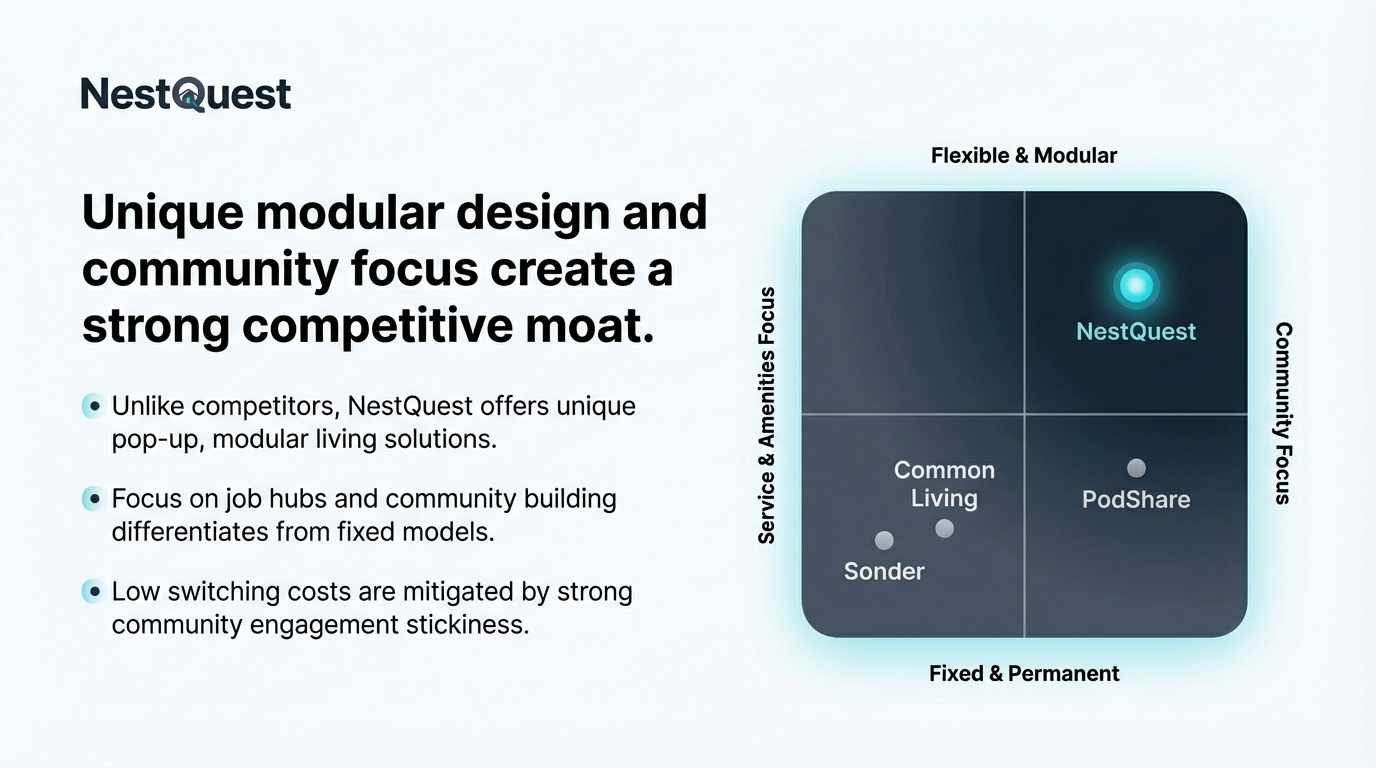 Moat versus legacy incumbents - NestQuest
Moat versus legacy incumbents
Moat versus legacy incumbents - NestQuest
Moat versus legacy incumbents
Regulatory Hurdles
- Research local zoning laws and building codes to ensure compliance.
- Collaborate with legal experts to navigate complex regulations.
Market Competition
- Differentiate your offering with unique amenities or community programs.
- Focus on niche markets or underserved areas to capture more demand.
Tenant Retention
- Implement AI-driven insights to enhance tenant satisfaction and retention.
- Regularly update facilities and services based on tenant feedback.
Financial Considerations
Starting a co-living real estate business involves significant initial investment, but with the right strategy, it can be a profitable venture.
Startup Costs
- Property acquisition or leasing
- Renovation and furnishing
- Technology implementation
Revenue Models
- Monthly rental fees
- Service charges for premium amenities
- Event hosting in community spaces
Funding Options
- Venture capital and angel investors
- Real estate investment trusts (REITs)
- Government grants for affordable housing initiatives
Getting Started Today
Starting a co-living real estate business is a promising venture for entrepreneurs looking to make a difference in the housing market. By leveraging AI and focusing on the needs of young professionals, you can create a successful business that offers affordable, flexible housing solutions. Denovo, a leader in real estate innovation, can provide the tools and insights needed to kickstart your journey. Begin your co-living venture today and contribute to shaping the future of sustainable urban living.
"The future of real estate is not just in ownership, but in creating flexible and community-oriented spaces that align with the needs of modern lifestyles." – NestQuest Team
Embark on your entrepreneurial journey in co-living real estate and redefine housing for the next generation.
Written by
denovo
A member of the Denovo community sharing their startup journey.